
Using a deus ex machina to resolve conflict in fiction usually elicits a few groans. Readers and audiences see it as “cheating” – breaking the logic of the story to provide a resolution that is ultimately unsatisfying. While admittedly many deus ex machina moments feel like dirty tricks, not all do. Some are clever and logical enough that they provide acceptable and even great narrative twists. Love them or hate them, deus ex machina in science fiction and fantasy are often unforgettable. Here are ten that have left deep footprints (or wounds, depending on who you ask) in the genres.
Note–these are not the ten “best” or the ten “worst” deus ex machinas (so they are not presented in any significant order); it’s a commentary on ten deus ex machinas that have resulted in significant discussions in the genre of speculative fiction.
Spoiler alert for all titles discussed below!
1. The Eagles in The Hobbit and The Lord of the Rings
You can’t have a list of deus ex machina without mentioning Tolkien’s giant eagles. Many newbie Tolkien readers and veterans fan alike find the appearance of the eagles at the most dire of times to save Frodo, Sam, Gandalf, Bilbo and the dwarves a little too convenient. It may be true that the eagles’ perfectly timed rescues are hard to swallow, but I’d argue that they’re passable because their presence as a deus ex machina doesn’t steal the show nor is it Tolkien’s intention that they should.
The eagles are narrative tools, not the laurels on which the books’ ending or major character/thematic resolutions rest. They don’t necessarily ‘end the conflict’ so much as shepherd the characters away from final doom once the conflict has been dealt with by the characters. A harmless and endearing deus ex machina, in my book. Speaking of narrative tools, you might find fantasy writing prompts helpful in sparking your creativity and exploring different narrative strategies.
2. Flying back in Time in Superman: The Movie

Ask my father, who was an avid reader of the Superman comics as a kid, what he thinks about Superman: The Movie and you will get an earful about Superman’s flying around the Earth time travel trick being just too much. Though I’m not an expert on Superman, I’d have to agree that this example falls under the realm of the bad deus ex machina. Maybe it works now in that nostalgic kind of way, but there is something that’s too ridiculous about the whole scene (I think it’s the ‘rewind shots’ of everything we just witnessed that gets me).
3. The Divine Plan in Battlestar Galactica
When the deus ex machina is actually a god, things get a little dicey. Fans of Battlestar Galactica watched four seasons of episodes in which character development seemed the primary method by which the plot moved ahead. When it was revealed these people who seemed to have free will were God’s pawns all along, it cheapened the show for many. Sure, it offered a way for the show to end and send all the characters on their little divinely planned futures, but it completely reversed the direction of the show all within one final dizzying episode. I like to imagine it never happened.
4. Priori Incantatem in The Goblet of Fire
The first time we witness priori incantatem in the world of Harry Potter is when Harry duels Voldemort following Cedric Diggory’s death. Logically, Voldemort, with his superior wand skills, should easily defeat Harry, but the strange magical phenomenon of priori incantatem–that we’ve never heard of before–gives Harry the chance to escape unharmed. In The Goblet of Fire, this device is clearly a deus ex machina, especially as we see Dumbledore has to explain what priori incantatem is after the fact to an equally confused Harry and readership. But much like Tolkien’s eagles, this plot twist doesn’t offend me in any way.
Rowling can get away it because the real narrative thrust is in the character development and thematic work at play (and she gets points for setting up the mystery of what it means for Harry and Voldemort to share wand cores much earlier on in the series).
5. The Claw from Toy Story 3
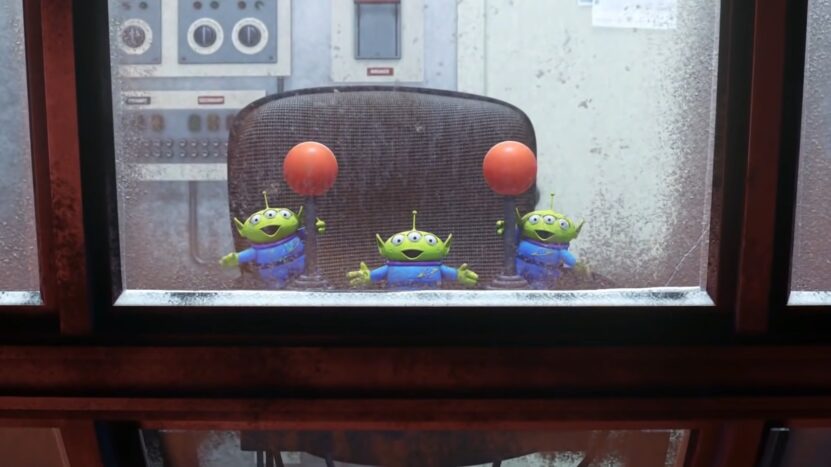
This is an example of a supremely satisfying deus ex machina and also a very consciously written one. Literally befitting of deus ex machina’s translation as ‘god out of the machine’ since the claw is worshipped by the aliens (and the claw-god is a machine), the claw/crane become the divine hand of salvation for the toys about to die in a fiery hell. It satisfies rather than elicits groans from audience members because there is just enough set-up in the previous movies to keep it from appearing random, meaningless, or inconsistent. It also works well because it’s in keeping with the playful tone of the films.
6. Bacteria in The War of the Worlds
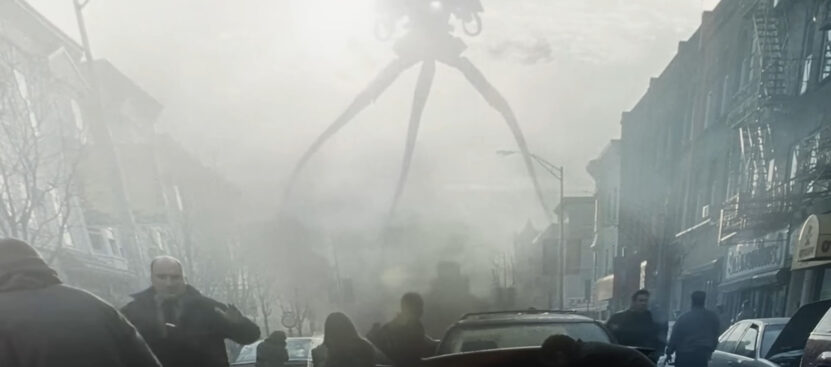
When I read War of the Worlds I was pretty impressed by the tripods. I felt the Martians deserved to win after all their success. That would have been an acceptable ending to me: in this particular war of the worlds we lost. Shit went down. We got our assess handed to us. Better luck next time. But then, at the moment in which the narrator is in the depths of despair, he suddenly finds out that the invaders all died from bacteria because…they had no immunity?
It comes out of nowhere, and it actually disappointed me. Can’t we give the Martians their due without resorting to a scientific curveball to save the clearly inferior human race? Of course, historically this may have been more satisfying to Wells’s audiences as a real cutting edge narrative twist, but it hasn’t aged well (and Spielberg should have ditched it).
7. Jacob’s Imprinting in Breaking Dawn
How do you solve the problem of a love triangle without killing anyone or going in the direction of a menage a trois? Stephanie Meyer found the answer: have the odd man out fall in love with the infant child of the other two characters. That way he can stick around and be part of the family, albeit in a creepy, cradle-robbing way. Jacob’s instant attachment to Edward and Bella’s baby acts doubly as a deus ex machina in that it ends the feud between the Cullens and the werewolves. It is also the most bizarre and laughable example on this list (and this list includes a man turning back time by flying around the earth at super speeds to make it spin backwards).
8. The Supercomputer in The Matrix Revolutions
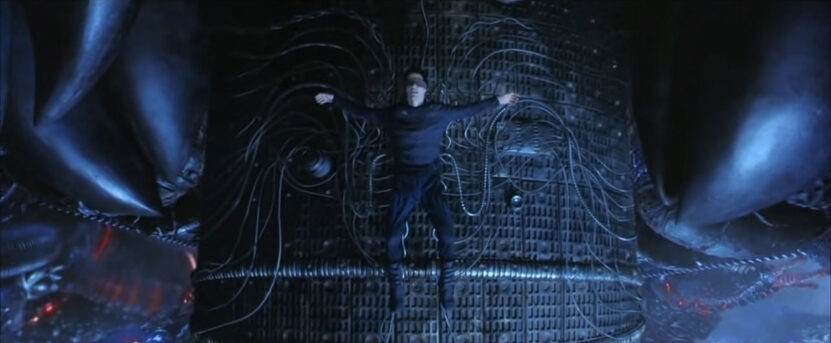
Yes, the supercomputer’s name is Deus Ex Machina. And yes, it is a deus ex machina, both in how it is the god of an army of machines and how it narratively solves all Neo’s problems when he asks it to. Nevermind that this machine was never introduced earlier in the movies. Nevermind that it’s painfully clunky as a bit of meta storytelling. It’s a deus ex machina, god damn it, and Wachowskis want you to know that. Whatever…I think I understand the many convoluted twists and turns of Pirates of the Caribbean 3 better than I understand the narrative logic of this movie.
9. Water in Signs
It’s kind of hard to fault M. Night Shyamalan for falling back on a deus ex machina when that’s what people demanded from him based on his reputation. Granted, a “twist” is not the same as a deus ex machina, but the lines are definitely blurred in Signs. The problem with this instance of the trope was that everything boiled down to it in the end. There was set-up here and there about the significance of water, so that in retrospect the whole film seemed to be pointing toward water as the weakness of the aliens. That made anything else remotely significant in the film seem irrelevant or ancillary. Sorry character development and metaphor – you don’t matter. Water is much more interesting.
10. The Nuclear Bomb in The Stand
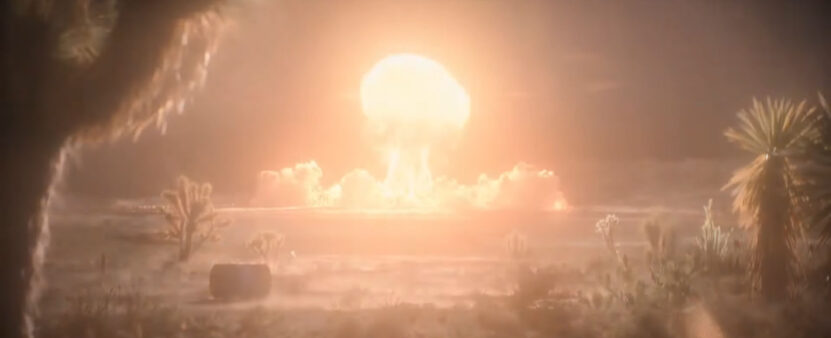
A nuclear explosion lit by an inexplicable bit of blue electricity someone refers to as the hand of God. Can’t get much more deus ex machina. I’ve seen some people argue against this notion, insofar as the book is about the struggle of good vs. evil and whatnot, but there’s no doubt that it comes ‘out of the blue.’ I’m not sure where I stand on this one, but the Stand bomb has certainly left readers (and television viewers) with plenty to discuss in the years since its release.
FAQs
1. What is the concept of Deus Ex Machina in literature?
Deus Ex Machina, a term originating from ancient Greek theatre, refers to an unexpected power or event that saves a seemingly hopeless situation, especially as a contrived plot device in a play or novel. It’s often used to resolve a plot and is typically characterized by its sudden and unexpected nature, which can sometimes feel unearned or out of place within the story’s established logic.
2. How does Deus Ex Machina influence the narrative structure of a story?
Deus Ex Machina can significantly influence the narrative structure of a story by providing an abrupt resolution to a complex problem or conflict. It can shift the plot dramatically, often leading to a sudden and unexpected ending. While it can provide a surprising twist, it can also disrupt the flow of the story and may be seen as a sign of weak plot development if it’s not handled carefully.
3. Can Deus Ex Machina be considered a narrative tool? Why or why not?
Yes, Deus Ex Machina can be considered a narrative tool. When used effectively, it can introduce a surprising twist, heighten drama, or provide a quick resolution to a complex situation. However, it’s a tool that should be used sparingly and with caution, as overuse or poor execution can lead to a disjointed narrative or unsatisfying resolutions that can leave readers feeling cheated.
4. Can Deus Ex Machina contribute to character development in a story?
Deus Ex Machina primarily serves to advance the plot rather than character development. Its sudden intervention often resolves external conflicts more than internal ones. However, the aftermath of a Deus Ex Machina event can contribute to character development if the characters react to, reflect on, or grow from the unexpected event. It’s not the Deus Ex Machina itself, but the characters’ responses to it that can offer opportunities for character development.
Final Words
Whether we love it or hate it, Deus Ex Machina continues to be a fascinating narrative tool that shapes the stories we read and watch, making us question the boundaries of storytelling and the very nature of plot resolutions. As we continue to explore new worlds and narratives, the role of Deus Ex Machina in shaping our understanding of conflict and resolution remains a compelling topic of discussion.